
(NEW YORK) — Inflation jumped for a third consecutive month as the Iran war continued to drive up prices in May, surpassing 4% for the first time in three years. The reading matched economists’ expectations.
Prices rose 4.2% in May compared to a year earlier, marking an increase from a year-over-year inflation rate of 3.8% in the prior month, U.S. Bureau of Labor Statistics data showed.
As recently as February, inflation clocked in just a few ticks above the Federal Reserve’s target level of 2%.
The Middle East conflict prompted the Iranian closure of the Strait of Hormuz, a maritime trading route that facilitates the transport of about one-fifth of global oil supply. The standoff triggered one of the largest oil shocks ever recorded.
Energy prices — a broad index that includes gasoline — soared 23% in May compared to a year earlier, data showed.
As a result, gasoline prices surged. The price of an average gallon of gas stood at $4.15 as of Wednesday, AAA data showed — an increase of $1.17 per gallon since the war began on Feb. 28. That amounts to a nearly 40% price jump in about three-and-a-half months.
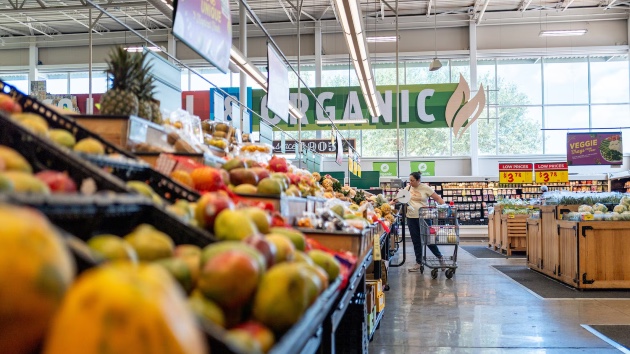
The oil shortage also drove up diesel prices, putting upward pressure on grocery prices. Diesel is the lifeblood of the food supply chain, fueling trucks and ships. Higher fuel costs for suppliers mean price hikes in grocery aisles as the increased costs are passed down the supply chain.
Prices for tomatoes soared 32% in May compared to a year earlier, government data showed. Seafood prices jumped 6% over that period, while beef prices climbed nearly 13%.
A persistent increase in consumer prices may put pressure on the Fed to raise interest rates as a means of dialing back inflation.
What does the inflation report mean for consumers?
The latest price data spells more bad news for shoppers, helping to explain widely felt angst in the check-out aisle.
In May, shoppers registered their worst sentiment on record in a survey conducted each month by the University of Michigan since 1952.
Prices ticked higher last month for a range of essentials, including food, gasoline and medical care. Overall, inflation stands at its highest level since April 2023.
“Americans are getting crushed by high prices and they’re telling us every chance they get that they can’t keep up,” Janelle Jones, a senior fellow at the left-leaning Groundwork Collaborative and a former chief economist at the Labor Department under President Joe Biden, told ABC News in a statement.
Inflation outpaced the rate of wage gains for the second consecutive months, eating away at the purchasing power of take-home pay for many Americans.
A continued decline in real wages — a term used by economists to describe inflation-adjusted pay — could erode the spending power of middle- and lower-income Americans over the second half of the year, Joseph Brusuelas, principal and chief economist at RSM, told ABC News.
Still, the inflation report offered a bright spot. Core inflation — a measure of price increases that strips out volatile food and energy prices — clocked at 2.9% over the year ending in May. While the figure marked its highest level since September, it came in well below the overall inflation rate.
Preston Caldwell, chief U.S. economist at Morningstar, described the core inflation rate as “close to normal.”
Between April and May, meanwhile, prices declined for some products like apparel and new vehicles.
Still, the fate of shoppers may depend on the outcome of the Iran war, particularly the status of tanker traffic in the Strait of Hormuz. While oil prices have eased in recent weeks, they remain well above where they stood before the Middle East conflict.
“The trouble is, the longer it takes to find a resolution, the more likely oil prices remain elevated. And the longer energy prices stay elevated; the stickier inflation can get,” Bret Kenwell, an investing analyst at eToro, told ABC News.
What does the inflation report mean for interest rates?
For now, futures markets overwhelmingly expect the Fed to hold interest rates steady when policy makers meet next week, according to the CME FedWatch Tool, a measure of investor sentiment.
The meeting will be the first since Kevin Warsh began a four-year term atop the central bank.
During his term as a Fed governor in the late 2000s and early 2010s, Warsh gained a reputation as an interest-rate “hawk,” meaning he generally preferred higher interest rates as a means of ensuring low and stable inflation.
Last year, however, Warsh voiced support for lower interest rates, rebuking the Fed’s concern about inflation risk posed by a flurry of new tariffs.
At his Senate confirmation hearing in April, Warsh emphasized the threat posed by elevated inflation.
“When inflation surges — as it has done in recent years — grievous harm is done to our citizens, especially to the least well-off,” Warsh said.
Copyright © 2026, ABC Audio. All rights reserved.